
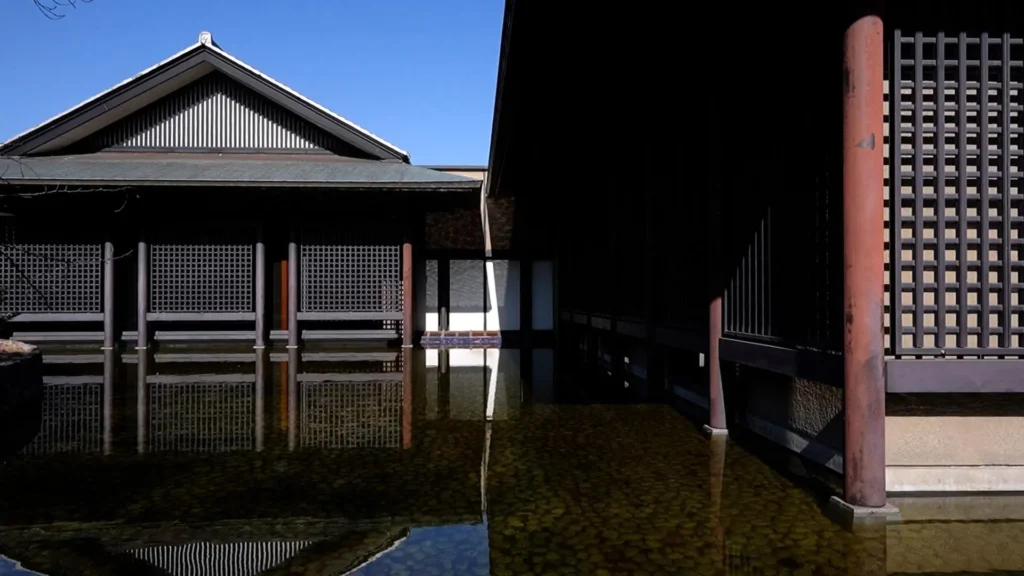
Wabi-sabi is a Japanese philosophical and aesthetic concept that identifies profound beauty in impermanence, incompleteness, and imperfection.
Wabi-sabi finds richness within the natural transitions and inevitable cycles of the physical world, actively rejecting the pursuit of superficial flamboyance.
- Wabi: The heart that accepts and finds subtle joy in the unadorned, as-is state of things, embracing rustic simplicity.
- Sabi: The appreciation of the unique character and aged beauty that time naturally accumulates, finding elegance in the wear, rust, and weathering of an object.
This concept implies the deliberate art of ‘subtraction’, stripping away the unnecessary, and places a profound emphasis on the appreciation of yohaku (meaningful blank or empty space).
Background
Historically, this worldview coalesced during the fifteenth and sixteenth centuries, most notably within the traditional Japanese tea ceremony as refined by the ceremonial matcha tea master Sen no Rikyu.
Rejecting the flawless, highly decorated ceramics favoured by the Rikyu advocated the implementation of simple, unadorned, and deliberately asymmetrical clay bowls.
Pottery made for the tea ceremony was often uneven, rough in texture, and deliberately simple. The cracked glaze on a tea bowl was part of the object’s character, a record of how it had been used and cared for.
Rikyu hosted tea ceremonies in modest structures, shifting the focus from ostentatious material wealth to a simple, natural harmony.
What Wabi-Sabi Looks Like in Modern Life
Contemporary practitioners integrate this philosophy by preserving the historical integrity of materials.
Modern space designs feature reclaimed oak beams, uneven hand-plastered walls, and naturally oxidised metals. Rather than concealing a crack in a wooden table, such traits are highlighted as a testament to an object’s past. Wabi-sabi cultivates a gratitude for the authentic existence of nature.
Linen that reveals different creases in every wash, and natural-coloured fabric with a raw material, featuring plant specks. The well-used smooth surface leather bag. The earthenware bowl has an uneven rim that you can feel the texture. The raw plaster wall in a London flat that nobody thought to paint over.
It also connects directly to kintsugi (金継ぎ) concept, the Japanese practice of mending broken ceramics with urushi (lacquer) and gold, embracing the crack. The repaired piece becomes authentic, blessing a new form of aesthetics.
Wabi Sabi in Shodō (Japanese Calligraphy)
In Japanese calligraphy, it conceptually connects with wabi-sabi.
It has beautifully uneven brushstrokes and empty space holding hidden stories. The ink runs thin at the edge of a stroke that was created with natural flow (or flaw). Read the introduction to shodō →
Take a look at where wabi-sabi shodo art is transferred to the sustainable wearable art form.
See the collection →