
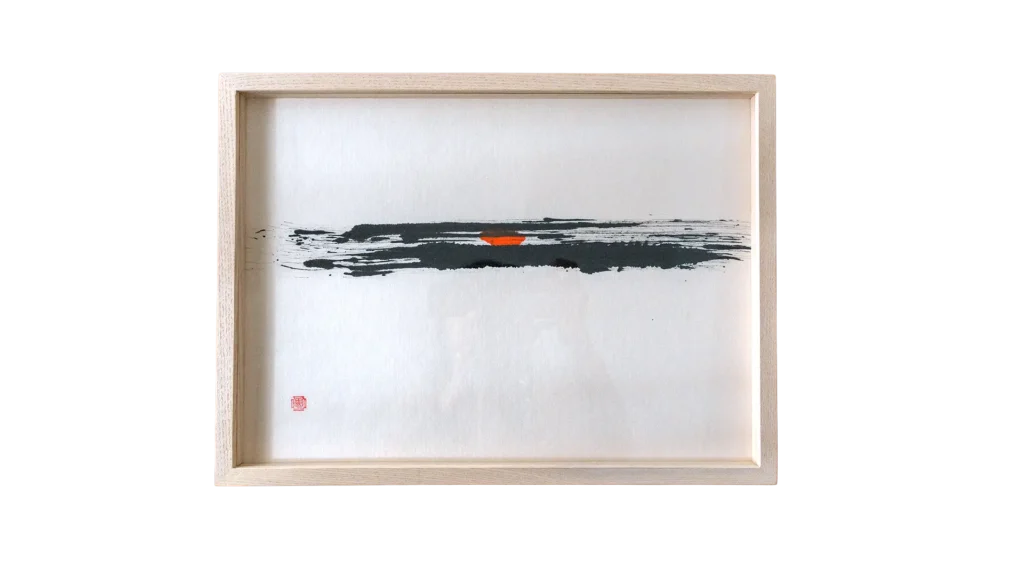
Shodō (書道) translates literally as “the way of writing.”
- Sho (書) represents the Japanese practice of writing with a brush and ink.
- Dō (道) means “the way,” indicating that the practice is classified as a lifelong discipline of mental and physical refinement rather than a purely decorative craft.
The technique requires precise upright posture, controlled breathing, and focused attention on each stroke, building clarity and discipline in equal measure.
Background
The practice began in the service of official documentation and the transcription of manuscripts. During the Heian period (794 to 1185 CE), Japan developed its own distinct calligraphic styles. The emergence of uniquely Japanese phonetic scripts, hiragana and katakana, gave rise to a distinctly Japanese aesthetic in calligraphy known as wayō (和様). This established shodō as a respected art form within the imperial court and among the aristocratic classes.
Wayō (和様) is characterised by its soft, light, and deliberately uneven quality, reflecting the aesthetic principle of wabi-sabi: the appreciation of natural imperfection.
Three separate writing systems form the foundation of written Japanese: hiragana, katakana, and kanji (漢字). By combining hiragana’s flowing, curvilinear characters with the structured weight of kanji or katakana, the wayō style emerged.
Structure
| Script | Structure | Usage |
| Hiragana (ひらがな) | Rounded, flowing, curvilinear syllabic characters | Native Japanese phonetic script; used for Japanese words, grammatical particles, and as the foundation of Kana calligraphy |
| Katakana (カタカナ) | Geometric, structured syllabic characters | Used primarily for foreign loanwords, technical terms, and onomatopoeia |
| Kanji (漢字) | Complex logographic form originally adopted from Chinese character | Core characters used for nouns, verbs, and adjectives in written Japanese |
Tools and Technique
Shodō uses four essential tools: the brush (fude), the inkstick (sumi), the inkstone (suzuri), and the paper (washi).
| Japanese Name | English Name | Traditional Fomura and Description |
| Fude (筆) | Brush | Brus Made from bamboo and animal hair. The flexibility of the brush allows for precise variation in line thickness and texture. |
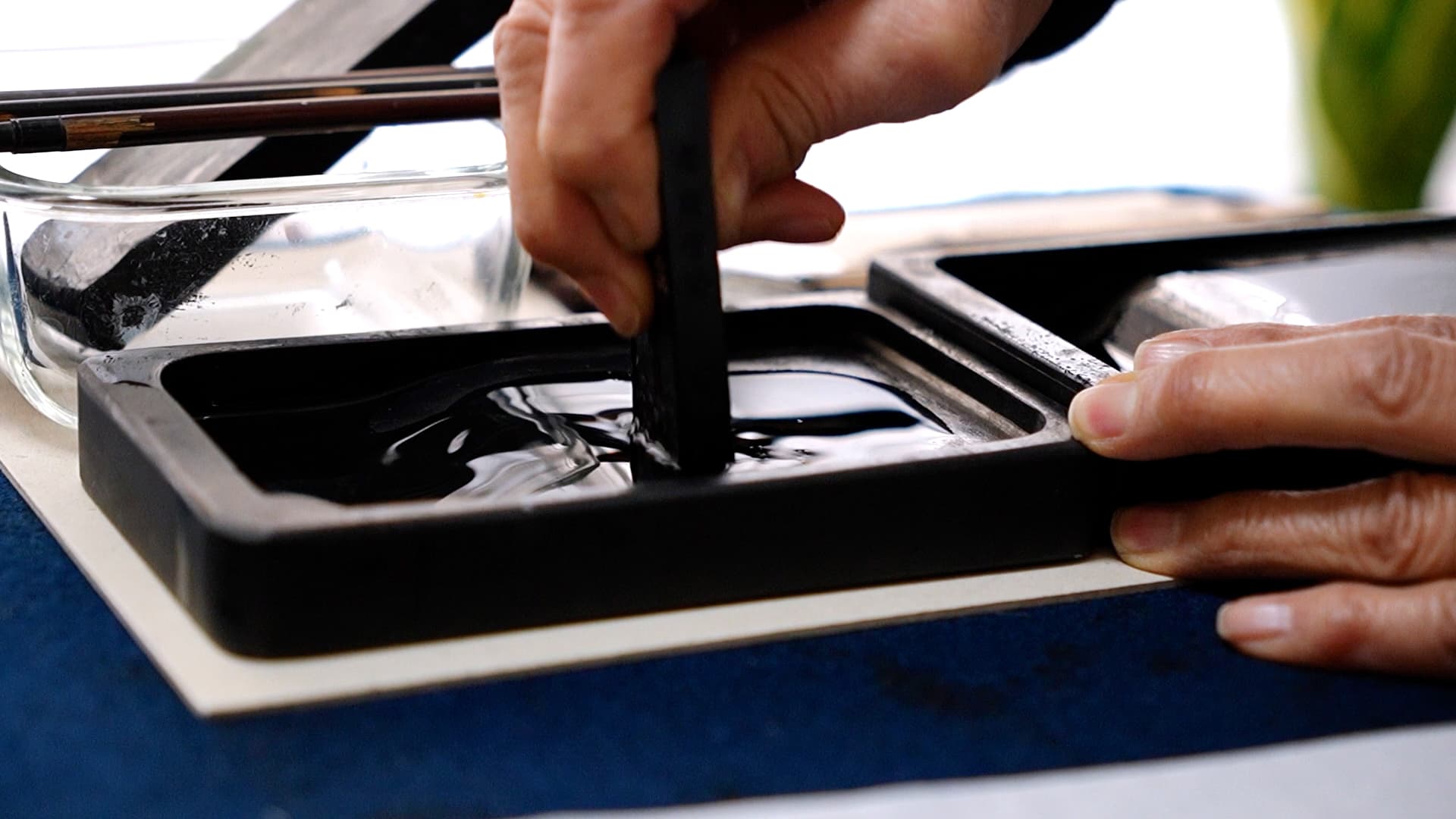
| Sumi (墨) | Inkstick | A solid stick of compacted wod soot and animal glue (vegan friendly types has became available in recent years). Ground with water by hand to produce liquid ink, allowing the calligrapher to control the density precisely. |
| Suzuri (硯) | Inkstone | A hand-carved stone with a shallow well for water and a flat grinding surface upon which the sumi is ground. |
| Washi (和紙) | Paper | Traditional Japanese paper made from plant fibres such as mulberry. Highly absorbent, it draws in the ink immediately on contact. |
The calligrapher grinds the sumi stick with water against the suzuri until the ink reaches the required consistency. Washi, thin and highly absorbent, draws in the ink the moment the brush makes contact.
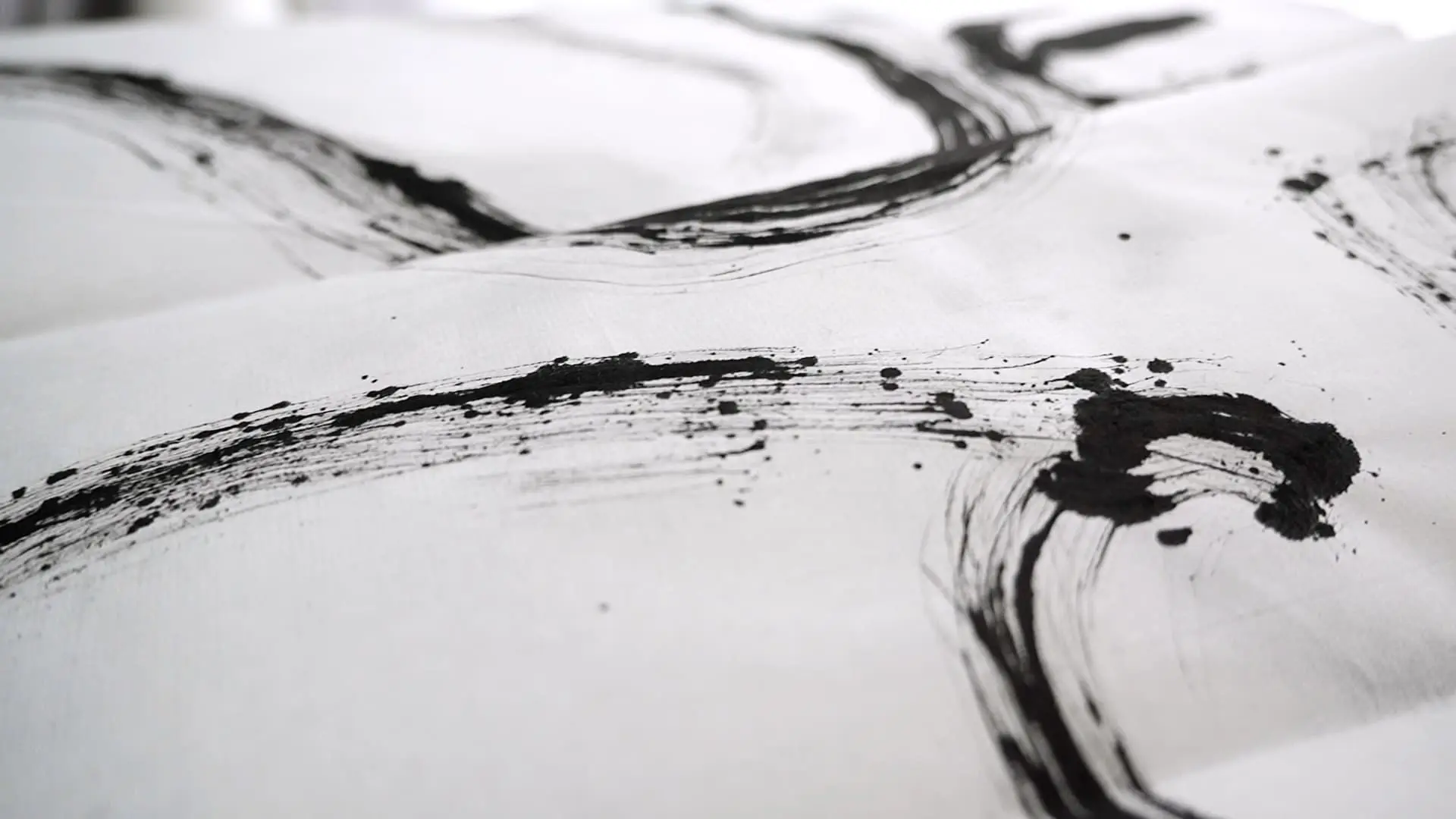
Each mark is final. Once applied, it stands exactly as made; there is no erasing, correcting, or painting over. Each brushstroke is a precise, unrepeatable record of how the brush moved, requiring steady control over pressure and speed throughout.
State and Philosophy
Calligraphers regulate line width, texture, and ink saturation by adjusting the pressure, velocity, and angle of the brush.
They aim to clear the mind of extraneous thought, allowing the brush to move in full alignment with the breath.
This state is known as mushin (無心), meaning “without mind”: a condition of clear, undivided presence in which the work is not premeditated but allowed to emerge. The resulting piece becomes a direct physical record of the calligrapher’s breathing, posture, and internal stillness at that exact moment.
This is the principle of wabi-sabi expressed in practice: finding beauty in what is natural and unrepeatable. A stroke that is not perfectly even is not a flaw; it is an honest record of a real moment. This thinking extends to yohaku (余白), the deliberate use of negative space, where the empty areas of the paper carry as much intention as the ink itself.
A specialised dry-brush technique known as kasure (掠め) takes this further: when ink runs sparse on the brush, individual hairs separate and leave calculated patterns of white space within a single black stroke, conveying momentum, velocity, and physical friction.
Creative Approaches
Shodō includes three basic approaches:
| Name | Style |
| Kana (かな) | Flowing native phonetic scripts. Delicate, continuous, sweeping lines that prioritise lyrical movement over structural weight. |
| Kanji (漢字) | Solid, structured monographic characters. Emphasises balance, architectural weight, and historical form. |
| Hitofude-gaki (筆書き) | One-line art | A piece is completed with a single continuous brushstroke, the brush never leaving the surface and no line retraced. Executed in one breath, and it can be abstract illustrated form. . |
Modern shodō extends well beyond the written page. Working at scale, artists use full-body movement to produce dramatic, oversized calligraphic works, an approach that has featured in international exhibits.
Whether executed on a stage or in a quiet room, the spirit of shodō remains the same: the alignment of mind and body to leave a focused, unrepeatable mark.
The Denmeg collection brings authentic shodō into wearable form, featuring fine one-stroke brushwork and delicate hiragana script across T-shirts and accessories.
The Denmeg calligraphy collection →